
There Will Be IP

In December, I wrote that IP was becoming a form of capital.
The occasion was the possible sale of Warner Bros. Discovery, but the sale itself was almost beside the point. Everyone was focused on who might inherit one of the last great collections of twentieth-century entertainment assets. Netflix. Paramount. CNN. HBO. The libraries. The debt.
That was the visible transaction. The more consequential transactions were happening elsewhere. Record labels were suing AI music companies while negotiating licensing arrangements with them. Disney was beginning to establish what authorized generative use of major entertainment IP might look like. Rights holders were discovering that the best response to a machine capable of producing infinite derivatives might not be to stop it. It might be to own the scarce input the machine still needed.
The warehouse mattered. The factory mattered more.
That was the premise of IP Is the New Capital. When generation becomes abundant, ownership becomes the bottleneck. The companies controlling large bodies of recognizable music, characters, stories, performances and worlds do not become less powerful because machines can make more content. They become the people who can determine which machines are legitimate.
At the time, the clearest evidence was the direction of travel. Warner Music had settled its lawsuit against Suno and entered into a licensing partnership. Universal had reached its own arrangement with Udio. Sony and Universal continued to litigate against Suno. The labels had begun converting a copyright confrontation into a market structure. The disagreement was moving from whether AI music should exist to who would control the conditions under which it existed.
Now we know more about what came before the negotiation.
The Bore
Suno was hacked in late 2025. The breach became public this week after a hacker shared source code and internal material with 404 Media.
According to the reporting, the exposed material describes a large-scale effort to acquire music, lyrics and other audio from YouTube Music, Deezer, Genius, stock-music libraries and podcast feeds. More than two million YouTube Music clips reportedly appeared in the material, along with thousands of hours gathered from other sources. The code included tools and instructions for pulling down audio, including a cappella recordings useful for vocal training.
Suno has long acknowledged training on large quantities of publicly available music and has argued that the use is fair. What had remained obscured was the acquisition machinery: where the files came from, how they were collected, how many there were and how intentionally particular kinds of material were sought.
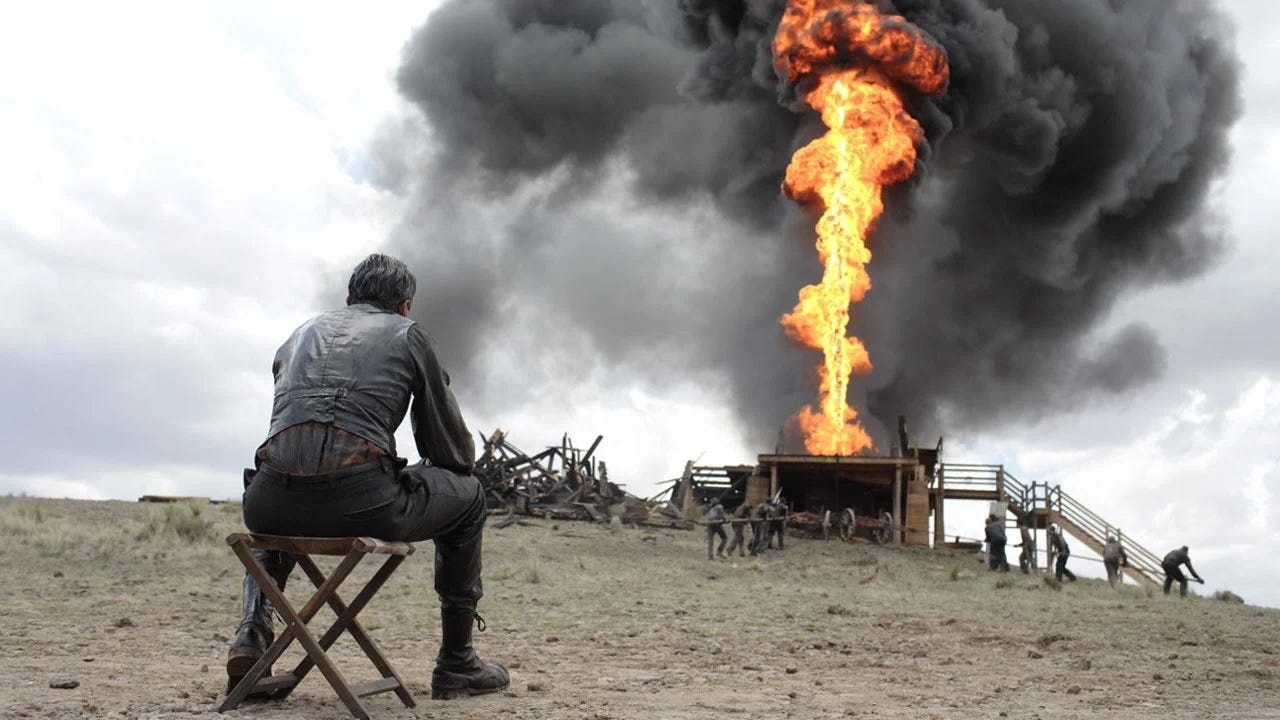
There is an old oil-field practice called whipstocking. A drill descends vertically, then turns underground and continues laterally. Used legitimately, it is directional drilling. Used across a property line without permission, it lets a man standing on his own land reach the oil beneath someone else’s.
One well quietly drains the reservoir under a neighbor’s ground, the theft finished before anyone thinks to look down. Nothing visible on the surface changes. The derrick stays on the driller’s parcel. The trespass happens below, along a path the neighboring owner cannot see.
That is closer to what the Suno breach appears to reveal.
The labels already believed Suno had drilled into their catalogs. They sued in 2024, alleging mass copying of protected recordings. In 2025, the litigation expanded to claims that Suno had circumvented YouTube’s technical protections to obtain the files. Sony and Universal have since sought to add more than 61,000 recordings to their case, while Suno has fought to keep the total size of its training corpus under seal, arguing that disclosure would expose competitively sensitive information.
The breach does not resolve the legal questions. It is hacked material, not a judicial finding. Courts still have to decide what Suno did, what was protected, whether technical protections were bypassed, and whether any part of the training process qualifies as fair use.
But discovery changes the shape of the argument. Before the breach, Suno could describe the training set at the level of principle: large amounts of high-quality music available on the open internet. After the breach, the argument moves closer to conduct: specific services, scraping instructions, acquisition tools, categories of material selected because they were useful to the product. The hidden bore becomes visible.
Ordinarily, that would suggest a simple response. Establish the trespass. Calculate the oil removed. Award damages. Stop the drilling.
Except a multibillion-dollar company has already been built above it.
Suno raised another $400 million in June while the Sony and Universal cases remained active. Warner is no longer merely a plaintiff trying to stop the company. It settled, licensed its catalog and became a commercial partner.
Bad news: I used your invention to build a company.
Good news: we’re looking for investors.
That sounds absurd because we still imagine ownership disputes as contests between an owner and a thief, followed by a return of the property or payment for what was taken. That is not the sequence here.
The material is gathered. A capability is built from it. Users arrive, revenue follows, value collects around the enterprise. Models, engineers, distribution and capital accumulate. The demand proves itself. The property dispute surfaces only afterward, along the buried path by which the material was taken. Nothing in that order requires anyone to have decided anything. It reads like weather.
At that point, damages are only one possible outcome. The underlying owners can also take a position in the new operation, license the resource prospectively, demand revenue participation, set the conditions of access, or use the litigation to establish a regulatory barrier against everyone who did not reach a deal. The legal claim becomes negotiating leverage over the company that grew from the alleged violation.
That is what I meant when I wrote that IP was becoming capital. But the Suno breach makes the mechanism easier to see. The rights do not merely protect an existing asset. They can be exchanged for ownership in the next system.
The Original Sin Problem
There is a temptation to tell this story as one more morality play about technology companies and artists, but that version is too clean.
Artists have always borrowed, copied, imitated, lifted and occasionally stolen. The history of popular music is full of work built by reaching into someone else’s work first.
The Beatles borrowed constantly, but Lennon described a discipline built around knowing when borrowing had crossed into exposure. In 1980, he said that in the early years he would sometimes carry another person’s song in his head and only recognize it once he put his own version on tape. At that point, he would consciously change the melody because he knew otherwise someone would sue. Of Harrison, Lennon was blunter: “He must have known.” Harrison later conceded that changing a note here or there would have been easy and would not have altered the feeling of the record.
Art develops through influence, memory, imitation, accident and theft. The boundaries have never been pristine.
Balzac’s line, usually translated as “Behind every great fortune lies a great crime,” survives because it captures something institutions prefer to forget once their origin stories become respectable. The fortune remains. The crime recedes into history, litigation, settlement or myth.
That does not mean every act of borrowing is equivalent, or that industrial scraping is simply what musicians have always done with better computers. Scale, method and market substitution all matter. A musician hearing a record and carrying part of it into another song is not operationally identical to a company acquiring millions of files and turning them into machine-readable production infrastructure.
But the difference is not innocence on one side and corruption on the other.
The difference is industrialization.
Technology takes a recurring human behavior and removes its natural limits. Memory becomes storage. Influence becomes ingestion. Experiment becomes a training run. A handful of borrowed records becomes millions of source files. The old ambiguity does not disappear. It becomes infrastructure.
Once that happens, the question is no longer whether culture can be made without prior culture. It cannot. The question is who is permitted to industrialize the inheritance.
The first companies through the door behave as though availability establishes a kind of provisional right. The material can be reached. The model can learn from it. The output is not a literal copy. The law has not yet clearly prohibited the process. So the process continues.
Rights holders respond with an older definition of ownership. The recordings are ours. Access is not consent. Public availability does not convert protected work into industrial feedstock. You cannot build a machine from our property and then invoke the novelty of the machine as your defense.
Both sides are arguing about copyright, but they are also competing to establish the rules of a new ownership regime.
The AI company says the right to learn from accessible culture attaches to the act of computation.
The rights holder says the right to authorize computational use attaches to ownership of the source material.
Whichever definition becomes embedded in licenses, settlements, product architecture and case law will matter far more than the rhetoric used to reach it.
The Earlier Conversion
This is where music becomes a dangerous comfort for Hollywood.
The music business has always had unusually legible rights. Recordings and compositions can be identified, fingerprinted, licensed and monetized. Labels have spent decades building systems that convert use into payment. It is easy for film and television executives to look at Suno and conclude that the conflict belongs to a different industry.
Music is made of tracks. Movies are made of stories, performances and images. A song can be streamed independently. A scene belongs inside a larger work. Music licensing is mature. Film rights are fragmented across studios, producers, writers, performers, guild agreements and territories.
Movies and television are different.
Just not in the way that matters.
In April, in Strip-Mining Hollywood for the Feed, I wrote about films and television programs being broken into short segments, re-narrated by synthetic voices and reconstructed as serialized microdramas for TikTok and other feed environments.
The accounts doing it had not made the films. They had not licensed them. They had found that professionally produced entertainment could be stripped into hooks, turns, reveals and emotional spikes, then reassembled into something better suited to a system that rewards immediate retention and repeated continuation.
The original footage supplied what native microdramas often lacked: credible production value, recognizable faces, strong performances and stories dense enough to survive severe compression.
AI narration supplied what the extraction removed. It bridged missing scenes. Replaced exposition. Explained motivation. Turned hours of continuous storytelling into a sequence of independently consumable fragments. The footage no longer determined the form. It became visual material serving a synthetic narration layer.
That was why I called the process strip-mining.
Strip-mining is the theft you can see. Whipstocking is the theft you cannot.
The value was real. The resulting format worked. The audience behavior was being proven by people who did not own the underlying material. And the likely destination was never simply mass enforcement.
The studios could close accounts and issue takedowns. They could sue. They could pressure platforms to improve detection. But once a behavior proves that it retains attention, produces repeated sessions and creates a new distribution surface, it does not usually disappear.
It gets converted.
Rights are asserted to establish dependency. Dependency creates leverage. Leverage creates entry. The unauthorized format becomes a licensed format, a revenue share, an approved tool, a distribution product or an acquisition.
At the edge, the activity is called theft.
At the center, after the agreements are signed, it becomes innovation.
That essay was about film and television, but it contained the music pattern inside it. The labels had already shown how the transition works. Publicly oppose the unauthorized use. Privately determine whether the capability has a market. Once the market is established, use ownership of the underlying material to negotiate control of the category.
The Suno breach is the missing middle. It shows the stretch between extraction and conversion that normally stays underground. What looked from the outside like something that merely happened begins to look like something that was done. Only after those steps exist does the mature negotiation begin.
The Lease
We still talk about intellectual property as though it were a stable object moving through a changing world.
A song is owned. A film is owned. A character is owned. A performance is owned. New technology arrives and creates novel ways to use those things. The law then determines which uses require permission.
That description is accurate, but incomplete. What is changing is what ownership means and how it is established in the first place.
In the previous media economy, ownership largely attached to works and the authorized derivatives made from them. A studio owned a film. A label owned a recording. Those assets could be distributed, licensed, remade, sampled, syndicated or adapted. Control began with a recognizable object.
Generative systems create value at a different layer. The valuable asset is not only the work. It is the capability produced by processing large bodies of work. Once trained, the system does not need to retrieve and resell a particular source recording every time it generates a song. The source material has been converted into model behavior.
That conversion creates a difficult ownership problem: what, exactly, survives inside the system?
The technology company points to the model and says it owns the code, weights, product, user relationship and generation process.
The rights holder points to the training corpus and says the capability could not have been built without controlled works.
The artist points to the recognizable residue of human practice and says both institutions are bargaining with value created by people who may receive little or nothing from the transaction.
All three claims can coexist. They simply attach at different stages of the production chain.
The mistake is assuming that the eventual settlement merely recognizes ownership that was already obvious. It helps establish ownership prospectively. The settlement is no longer only settling the past. It is defining the future.
When a label licenses a catalog for AI training, takes equity or negotiates a revenue share, it is doing more than collecting compensation for prior use. It defines the relationship between source ownership and machine capability. It is asserting that ownership of recordings carries a right to participate in systems trained from them.
When an AI company agrees, it is doing more than resolving litigation. It is purchasing legitimacy and, potentially, protection from competitors that lack comparable licenses.
When the agreement becomes standard, the category changes. A company that trained first and negotiated later may become an authorized platform. A company that attempts the same process afterward without the same capital or relationships may simply be an infringer.
The early act establishes the capability. The later deal establishes the moat.
This is why “theft” and “fair use” are both inadequate as complete descriptions. They are positions within the contest. They do not tell us what the contest produces.
What it produces is a new allocation of ownership.
Technology companies own the models. Rights holders own access to the legitimizing inputs. Investors own portions of the enterprises created between them. Creators may own whatever their original contracts left them.
The details differ in film and television, but the progression will be familiar. Unauthorized reconstruction proves formats and demand. Platforms observe what retains. Studios assert rights once the behavior becomes economically meaningful. Licensed tools and approved pipelines replace some of the accounts that established the market. Libraries become inputs into systems that can reformat, localize, narrate, personalize and extend old work at a scale no conventional production operation could support.
The studios will say they are protecting their IP, and they will be. They will also be using it to acquire a position in the machinery that changed its value.
That second phase is already visible in music. The American Federation of Musicians sued Warner and Universal last month, alleging that the labels’ AI licensing arrangements allowed use of musicians’ recordings without the permission or compensation required by union agreements. The rights holders describe the deals as responsible participation in the future of music. The musicians argue that the labels are monetizing a new use of performances they do not have the unilateral right to contribute.
That dispute is not incidental. It asks who actually possesses the right being converted into capital.
The label owns the recording. The musician makes the performance. The AI company builds the model. The investor funds the scale. The user generates the output.
Ownership exists at every layer, but power does not.
The difference is not that the labels necessarily own every right they are now converting. It is that they occupy the position of presumed owner while the conversion occurs. They can license the new use, capitalize it, and settle any dispute with artists afterward. The artists cannot run the same sequence in reverse because they are never treated as the party entitled to make the deal. The machine does not wait for ownership to be finally adjudicated. It runs on whoever has transactional standing when the papers are signed.
The parties able to stop the system, finance it or legitimize it will define the initial market. Everyone else will negotiate from the architecture they leave behind.
That is how ownership is established during technological transitions. Not in a single statute or court opinion. Through a sequence of acts that become progressively harder to reverse.
None of it was weather. At every critical instance there was a high road and a low road. Suno chose.
Acquire the material. Build the capability. Prove the market. Survive the challenge. Convert the challengers into counterparties. Call the resulting structure responsible.
By the time the rules are clear, the companies that forced the question may already own the answer.
There Will Be IP
The maximalist prediction about generative AI was that intellectual property would lose its force.
Models would absorb everything. Outputs would multiply beyond detection. Style could not be owned. Enforcement would become technically or economically impossible. Scarcity would collapse, taking the old rights system with it.
Some of that may still happen at the edges. But the institutional response is moving in the opposite direction.
There will continue to be protectable intellectual property, and it will be more valuable than ever.
More catalog licensing. More provenance requirements. More contractual control over voices, likenesses, performances and training rights. More distinctions between approved and unapproved models. More negotiated access to the cultural material required to build commercially viable systems. More capital flowing toward owners of large, clean rights portfolios.
AI makes generation abundant. It does not make legitimacy abundant.
That remains something institutions can sell.
The first generation of AI companies may have built their systems during a period when the ownership rules were unsettled and the source material was technically reachable. Their success does not eliminate the claims against them. It gives those claims something more valuable to attach to.
The catalogs are no longer only libraries of old work. They are positions in new companies, leverage over new markets and admission tickets to a production system still being formed.
The source owners may not get the oil back.
They may end up owning part of the drilling company.
Great piece! Once again, music leads the charge against a new infringing technology, fighting for enforceable copyright rules. Let's hope Hollywood is watching closely and taking notes similar battles are already underway, and they'll only get uglier from here.